


Your organization has a brilliant program idea you’re keen to bring to life. But one missing document or a poorly justified budget line can turn months of work into a rejection letter.
This guide describes how a solid program proposal template provides a clear structure for presenting complex initiatives. You’ll learn how a template keeps your proposal organized and compliant, making it easier for reviewers to see your program is worth funding. And with the support of monday work management’s collaborative workspace, you can present a proposal your funders want, write narratives that stick, and coordinate approval processes.
Try monday work managementKey takeaways
- Incorporate SMART objectives funders can measure into your proposal: Define specific, quantifiable outcomes like “increase literacy scores by 25% among 200 students” rather than vague goals like “improve education.”
- Research funder priorities before writing a single word: Align your program narrative with what funders care about by studying their recent awards and strategic plans.
- Write your executive summary last but make it count: This 1-2 page section often determines funding decisions, so craft a compelling hook and clear value proposition that stands alone.
- Build budgets that tell your program’s story: Every line item must connect directly to program activities with clear justification showing funders how their money creates impact.
- Coordinate stakeholder reviews without chaos: monday work management enables real-time collaboration and automated deadline tracking, preventing version control disasters and missed submission deadlines.
What is a program proposal template?
A program proposal template helps you present big initiatives that need funding, stakeholder buy-in, or coordination across departments. Unlike project proposals that focus on specific deliverables, program proposals address long-term, outcome-based initiatives with complex dependencies, multiple workstreams, and sustained resource commitments.
Organizations use these documents for federal grant applications, foundation funding requests, and internal budget approvals for large-scale initiatives. The template keeps everything organized and compliant, so reviewers can quickly assess whether the program is feasible and impactful.
Key program proposal components
Reviewers expect to see specific elements in every program proposal which build the case. Miss any of the following elements, and you risk automatic rejection, no matter how strong your program is.
- Executive summary: A concise overview of the problem, solution, and funding request — often the only section busy reviewers read
- Program objectives: Measurable goals that define what the program will achieve and how activities lead to real changes in the people you serve
- Target population: A detailed description of who you’re serving, including demographics, needs, and why this program matters to them
- Methodology and approach: The specific evidence-backed strategies and activities you’ll use to hit your objectives
- Timeline: A realistic schedule showing your planned implementation phases, milestones, and deliverables, all of which is proof you can pull this off within the funding period
- Budget and narrative: A detailed financial plan itemizing costs with narrative justification for every expense, connecting dollars to program activities
- Evaluation plan: How you’ll measure success, including your data collection methods and most important metrics
- Organizational capacity: Proof your organization can handle the money and deliver the program, based on staff qualifications, past wins, and track record
- Sustainability plan: Your plan for keeping the program alive after the grant runs out, whether through new funding or other strategies
Program proposal vs business proposal template
Program proposals and business proposals both seek approval and resources, but they serve different purposes. Know the difference, and you’ll choose the right framework and speak your reviewers’ language.
| Feature | Program proposal | Business proposal |
|---|---|---|
| Primary purpose | Securing funding for social impact or organizational initiatives | Securing a contract, sale, or investment for commercial gain |
| Success metrics | Outcomes (literacy rates, health improvements) | ROI, profit margins, market share growth |
| Timeline | Multi-year initiatives with phased implementation | Project-based or transaction-focused timelines |
| Funding source | Grants, foundations, internal budgets, government agencies | Clients, investors, venture capital, customers |
| Focus | Methodology, compliance, and beneficiary impact | Value proposition, pricing, and competitive advantage |
When you need a program proposal format
A program proposal template is best in high-stakes scenarios where an unstructured approach is too risky. Here are some common scenarios where you’ll need a formal program proposal:
- Federal and state grant applications: Applying for literacy program funding requires strict adherence to government formatting and compliance standards
- Foundation funding requests: Requesting community health initiative support demands a narrative focus on community impact and alignment with foundation missions
- Corporate social responsibility initiatives: Proposing a new sustainability program to a corporate board requires a business case for social impact
- Nonprofit program development: Launching a new workforce development branch requires a blueprint for internal alignment and donor solicitation
- Academic research programs: Seeking science grants, for example, requires rigorous methodological detail and peer-review readiness
- Internal organizational approvals: Requesting budget for a company-wide digital transformation program requires a defined ROI and implementation roadmap
How to define program objectives and measurable outcomes
Objective-setting is the foundation of a successful proposal. It tells funders exactly what their money will buy. Funders approve proposals that promise specific, verifiable results rather than vague aspirations. Strong objectives connect the problem to your solution and give you a defined way to measure success.
Write SMART goals for your proposal
The SMART framework works for program proposals because it focuses on outcomes, not just activity counts. Each element builds funder confidence in a specific way.
- Specific: The objective identifies the target population and the specific change expected
- Measurable: The objective includes quantifiable indicators that can be tracked
- Achievable: The goal is realistic given the proposed budget, timeline, and organizational capacity
- Relevant: The objective aligns directly with the funder’s priorities and the identified community need
- Time-bound: The objective has a definitive deadline aligned with the grant period
Example: Instead of writing “improve literacy in our community,” a SMART goal would state: “Increase reading proficiency scores by 25% among 200 third-grade students in Title I schools by June 2026.”
Connect objectives to funder priorities
To win funding, research what funders care about and align your objectives accordingly. Review funder guidelines and identify key terminology the funder uses in their strategic plans.
A program focused on youth mentorship might be framed as workforce preparation for a corporate funder or violence prevention for a municipal agency. Map your outcomes to what the funder cares about. Use their language, but don’t compromise your program’s core design.
Create outcomes that demonstrate impact
Outcomes differ from outputs. Outputs are activities completed, while outcomes are the changes that result from those activities. Proposals must present outcome projections that are credible, selecting indicators that are meaningful to funders and measurable with available resources.
| Component | Definition | Example |
|---|---|---|
| Output | Direct products of program activities | 50 workshops held; 500 brochures distributed |
| Short-term outcome | Immediate changes in knowledge, skills, or attitude | 85% of participants demonstrate increased financial literacy |
| Long-term outcome | Lasting changes in behavior, status, or condition | 40% of participants remain debt-free after two year |
How to research funder requirements and compliance standards
Funder requirements vary widely. Miss one compliance element, and you risk automatic rejection, no matter how good your proposal is. Identify and document all requirements before you start writing. It saves time and makes sure your submission is eligible for review.
Understand 2026 compliance requirements
Compliance rules have a big impact on program proposals in 2026. You’ll need to address these requirements in both your narrative and budget:
- Updated funding guidelines: New regulations from government agencies and international bodies affect how you calculate and report indirect costs and administrative expenses
- Performance reporting standards: Proposals must account for the resources needed to meet rigorous quarterly and annual performance reporting requirements set by funders
- Audit compliance standards: Organizations spending over specific thresholds must budget for and undergo independent financial audits as required by their funding sources
- Data privacy regulations: Programs handling participant data must demonstrate compliance with applicable data protection laws (such as GDPR in Europe, PIPEDA in Canada, or equivalent regulations in your jurisdiction)
Find current compliance information on your funder’s website, relevant government agency portals, and applicable regulatory frameworks in your region.
Align with strategic funding priorities
Beyond basic eligibility, your proposal needs to align with what the funder cares about right now. Analyze mission statements, review recent funding announcements, and study summaries of recently funded projects to identify emerging priority areas.
A workforce development program might align with an economic recovery priority one year and a youth equity priority the next. Understand these shifts, and you can position your program to fit the current funding cycle.
Gather required documents and certifications
A strong proposal needs supporting documents and certifications that prove you’re ready and legally compliant. You’ll need:
- Organizational documents: IRS determination letters, audited financial statements, and current organizational charts prove legal status and fiscal health
- Program-specific materials: Letters of support from partners, Memoranda of Understanding, and draft evaluation instruments demonstrate readiness
- Compliance certifications: Standard forms regarding lobbying disclosure, drug-free workplace policies, and civil rights compliance are universally required for federal funding
How to write a compelling executive summary
The executive summary is the most critical section of the proposal because reviewers often make initial decisions based on these 1-2 pages alone. Although it appears first, write it last to accurately reflect the full proposal content. It’s a standalone document that needs to communicate your program’s value, feasibility, and impact right away.
Hook reviewers with your opening
Your opening needs to grab attention fast. What makes your program worth funding over hundreds of competing proposals? Try these approaches:
- Compelling statistic: “In our district, 40% of high school seniors graduate without basic math proficiency”
- Brief success story: “Last year, the Pilot Program helped 50 homeless veterans secure permanent housing within 90 days”
- Urgent problem statement: “Without immediate intervention, the local wetland ecosystem faces irreversible collapse by 2028”
- Vision statement: “We envision a city where every child has access to fresh, healthy food within walking distance of their home”
Strong openings skip the generic stuff and lead with your most compelling point — balancing emotion with credibility.
Highlight your unique value proposition
A strong value proposition shows what makes your program different in a crowded field. Look at what’s already out there, find the gaps, and explain exactly what makes you different.
Combine who you’re serving, your unique approach, expected outcomes, and your organization’s strengths. You might highlight a unique partnership or a new technology that sets you apart from standard approaches.
Structure your summary for maximum impact
Your executive summary needs a logical flow that builds the case quickly. Start with the problem and its urgency, then present your solution and approach. Follow with your specific objectives and expected outcomes, include the funding request and timeline, and close with your organization’s qualifications. Each paragraph should advance the argument, creating a narrative arc that moves from “here’s what’s wrong” to “here’s why we’re the ones to fix it.”
How to build a comprehensive budget and resource plan
Budgets tell the program’s story through numbers. A realistic budget supports your objectives and meets funder requirements. Every line item needs to connect to a program activity, so you can show funders you understand what it really costs to pull this off.
Include essential budget categories
Here are the standard budget categories: Each category needs specific documentation and justification:
- Personnel: Salaries and wages for program staff, calculated by percentage of time dedicated to the project
- Fringe benefits: Standard organizational benefit rates applied to personnel costs
- Travel: Costs for staff travel to training or participant transportation, including mileage and per diem
- Equipment: Tangible assets with a useful life of more than one year, often requiring specific justification
- Supplies: Consumable materials needed for program delivery, from office supplies to training manuals
- Contractual: Costs for consultants, evaluators, or specialized service providers
- Other direct costs: Expenses not covered elsewhere, such as printing, rent, or communication costs
Calculate direct and indirect costs
Direct costs are expenses directly attributable to specific program activities, such as the salary of a program manager or the cost of training materials. Indirect costs represent the organizational infrastructure that supports the program, such as rent, utilities, and executive leadership.
Indirect costs are typically calculated using a federally negotiated rate or a de minimis rate applied to the modified total direct costs. Calculate and allocate these costs transparently; it’s essential for audit compliance.
Justify every resource allocation
The budget narrative defends each expense. It connects costs to program activities, explains how you calculated them, and shows they’re cost-effective.
A strong justification explains why a specific expense is necessary for success. Organizations using monday work management can track these resource allocations and draft justifications by maintaining a record of resource planning assumptions, connecting budget line items directly to program activities and timelines.
How to manage stakeholder reviews and approval workflows
Coordinating proposal development across stakeholders? You need a clear process. Successful proposals integrate input from program staff, leadership, finance, and partners without missing submission deadlines.
Set up collaborative review processes
A clear review process defines who does what. Content developers write the narrative, subject matter experts verify technical accuracy, financial reviewers approve the budget, and compliance officers check against regulations.
A timeline working backward from the submission date establishes windows for initial drafting, stakeholder review, revision cycles, and final sign-off. Teams using monday work management support this process through real-time collaboration where stakeholders provide feedback directly on documents, with automated notifications alerting reviewers when sections are ready.
Track feedback across multiple reviewers
You need a central system to capture feedback, track revisions, and resolve conflicts. Feedback tracking logs identify the reviewer, the specific section, the comment, and the resolution status.
This prevents version control issues where conflicting edits are made to different document copies. On monday work management, organizations can enable real-time commenting and assignment directly in the proposal workflow, maintaining version history so everyone works on the current draft.
Meet tight submission deadlines
Smart deadline management helps you stay ahead of schedule and submit with confidence. Internal deadlines should be set at least 48 hours prior to the actual submission time to account for technical glitches.
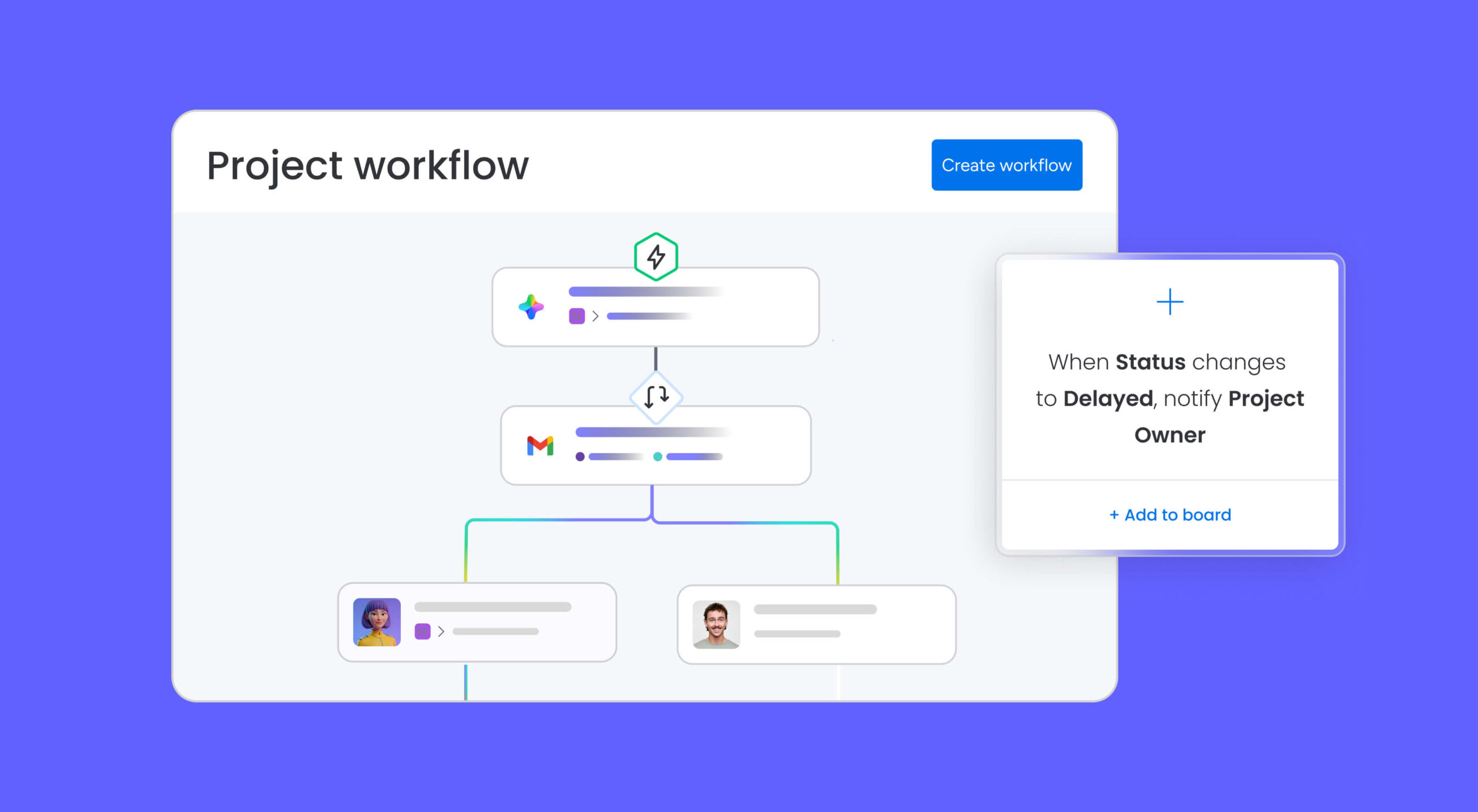
Contingency plans address common delays like absent signers or system outages. A final submission checklist verifies technical requirements, file formats, and required signatures before the upload begins. Automated workflows trigger alerts for deadlines and compliance checks, ensuring you collect and store all required documents.
Transform your program proposal process with monday work management
Developing program proposals is complex. You’re juggling coordination, tight deadlines, and precise resource planning. Traditional methods like spreadsheets and email threads often lead to version control issues and missed requirements.
monday work management transforms this process with features that cover every stage of proposal development:
- Proposal development workflow management: Custom boards track every section of the proposal, assigning writers, setting review deadlines, and monitoring progress. Gantt and Kanban views visualize the timeline, highlighting dependencies and critical path items to ensure the team stays on schedule.
- Stakeholder collaboration and review coordination: The platform enables real-time collaboration where stakeholders provide feedback directly on documents. Automated notifications alert reviewers when sections are ready, and version history ensures everyone works on the current draft.
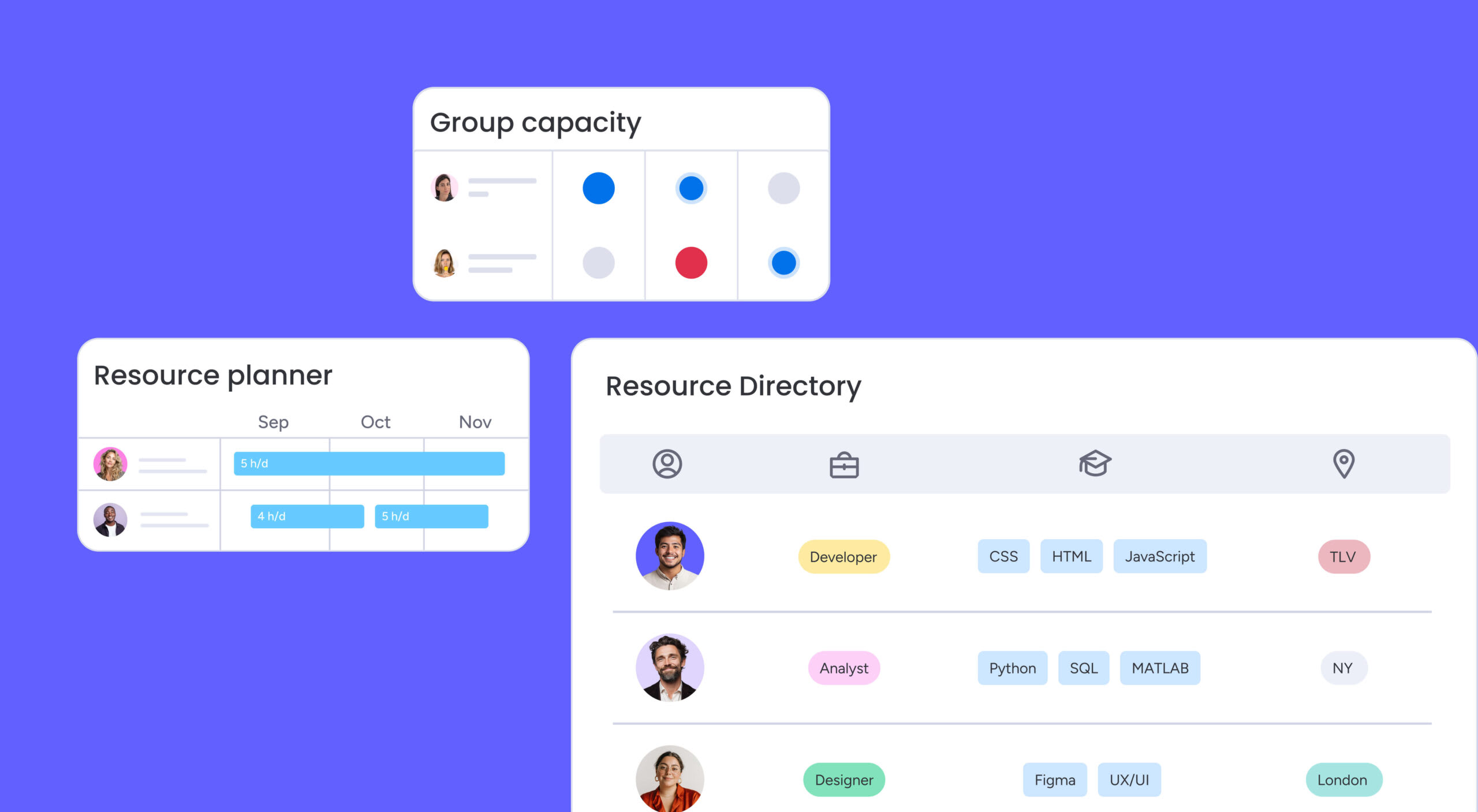
- Budget planning and resource allocation: Resource management features allow teams to build detailed proposal budgets, track potential resource loads across multiple grants, and monitor actual spending against the budget once the program is funded. The Workload View helps balance team resources and adapt to changing priorities.
- Compliance and deadline management: Automated workflows trigger alerts for upcoming deadlines and compliance checks. Checklists ensure all required documents are collected and stored systematically before submission.
- AI-powered proposal optimization: AI capabilities assist in categorizing proposal requirements and summarizing complex funding guidelines. AI Blocks extract key dates and deliverables from RFPs, while the Digital Workforce helps draft status updates and track stakeholder communications.
| Feature | monday work management | Traditional methods |
|---|---|---|
| Collaboration | Real-time, in-context feedback and editing | Disjointed email threads, version conflicts |
| Deadline tracking | Automated reminders and dependency alerts | Manual calendar entries, high risk of misses |
| Visibility | Centralized dashboards for all proposals | Scattered files, lack of portfolio view |
| Compliance | Integrated checklists and document storage | Manual folders, risk of missing documents |
| Scalability | Standardized templates for repeat success | Recreating processes from scratch each time |
Streamline your next funding opportunity
Creating winning program proposals means balancing big-picture thinking with operational details. The difference between funded and rejected proposals often comes down to execution quality rather than program merit. Organizations with solid proposal processes win more often and can chase more opportunities at once. With the right systems, your team can focus on writing strong narratives and showing impact by maintaining an organized, repeatable process.
Ready to change how you handle program proposals? Start building workflows that turn proposal development from a stressful sprint into a confident, repeatable process.
Try monday work managementFrequently asked questions
How do you write a program proposal?
Writing a program proposal involves defining objectives and measurable outcomes, researching funder requirements, developing a comprehensive budget and timeline, and creating an evaluation plan that demonstrates program impact. Start by establishing SMART goals, align your narrative with funder priorities, and ensure every component connects to measurable outcomes.
What are 5 things all proposals should include?
All program proposals should include an executive summary that captures attention and summarizes key points, program objectives with measurable outcomes, a detailed budget with justification for every expense, an implementation timeline with milestones and deliverables, and an evaluation plan showing how you'll measure and report success.
What is the difference between a program proposal and a grant proposal?
A program proposal is a broader category that includes any request for funding or approval for a specific initiative. A grant proposal specifically refers to requests for grant funding from government agencies, foundations, or other grant-making organizations. All grant proposals are program proposals, but not all program proposals are grant applications.
How long should a program proposal be?
Program proposal length varies by funder requirements, typically ranging from 5-50 pages depending on the funding amount and program complexity. Government grants often require 20-50 pages, foundation proposals usually run 5-15 pages, and corporate proposals typically need 3-10 pages.
Can I use the same proposal template for different funders?
While core proposal elements remain consistent, each funder has specific requirements, priorities, and formatting guidelines that require template adaptation. Customize your template to align with individual funder priorities, use their specific terminology, and address their unique evaluation criteria while maintaining your program's core design.
Can ChatGPT write a proposal?
ChatGPT can draft proposal sections and generate initial content, but it can't replace the strategic thinking, funder research, and organizational knowledge that winning proposals require. Use AI tools like ChatGPT to overcome writer's block, generate outline structures, or refine language, but always customize the output with specific program details, authentic organizational voice, and alignment to funder priorities. The most effective approach combines AI assistance with human expertise: let AI handle first drafts and formatting while you focus on strategy, compliance verification, and the compelling narrative that only someone who knows your program can write.

 Get started